Breathing Exercises for Smoking Cessation: What Research Says
When a craving strikes during a quit attempt, most people have been told to "just breathe through it." It sounds like advice too simple to be useful — a vague platitude rather than a real strategy. But the instruction is more scientifically grounded than it appears. Controlled breathing exercises act on the same autonomic nervous system pathways that nicotine exploits, and a growing body of clinical literature confirms that specific breathing techniques can meaningfully reduce craving intensity, negative affect, and withdrawal symptoms during smoking abstinence.
Not all breathing techniques are equally supported by evidence. Some have been tested directly in smokers in randomized controlled trials. Others have well-established evidence for stress and autonomic regulation that reasonably extends to cessation support, even without a smoking-specific trial. This article is explicit about those distinctions. It examines the neurophysiological mechanisms by which breathing modulates nicotine craving, reviews the clinical evidence, and presents the best-supported techniques in order of how directly their evidence applies to craving and cessation — so you can choose what fits your situation and understand exactly what the research does and does not show.
⚡ The Bottom Line: If You Are Having a Craving Right Now
If your attention is fractured by a current urge, skip the science and do this immediately:
- Find your rhythm: Inhale slowly through your nose for 5 seconds.
- Release slowly: Exhale through your nose or pursed lips for 5 seconds.
- Repeat for 3 minutes: This specific rate (6 breaths per minute) is the "resonance frequency." It acts like a biological kill-switch for cravings by forcing your nervous system out of "fight or flight" and into "rest and digest."
The Neurobiology of Nicotine Craving and Why Breathing Can Interrupt It
To understand how breathing exercises reduce cravings, it is first necessary to understand why cravings arise. Nicotine binds to nicotinic acetylcholine receptors in the brain, triggering dopamine release in the mesolimbic reward pathway (the brain's primary pleasure and habit center). With repeated exposure, the brain downregulates receptor sensitivity and baseline dopamine tone, creating a state in which normal function depends on continued nicotine input. When smoking is stopped, this system is thrown into deficit — producing the restlessness, irritability, concentration impairment, and intense urge to smoke that characterize withdrawal.
Critically, the stress response system is deeply implicated in this process. Nicotine withdrawal elevates sympathetic nervous system activity (the "fight or flight" response), increasing cortisol output and heart rate while reducing heart rate variability (HRV) — the beat-to-beat variation in cardiac rhythm that reflects parasympathetic tone (your body's ability to relax). Reduced HRV is consistently observed in abstaining smokers and correlates with both craving intensity and relapse likelihood. The autonomic imbalance that withdrawal creates — a shift toward sympathetic dominance — makes cravings feel urgent and overwhelming.
Controlled breathing exercises intervene at precisely this point. Slow, diaphragmatic breathing at rates of approximately five to six cycles per minute activates the baroreflex, increases vagal afferent signaling (the calming messages your body sends to your brain), and shifts autonomic balance toward parasympathetic dominance. This has measurable downstream effects: HRV increases, cortisol levels fall, and activity in limbic structures associated with craving — including the insula, amygdala, and anterior cingulate cortex — is modulated through interoceptive pathways (the internal sensors that monitor your body's state). Little et al. (2025), in a narrative review published in Stress and Health, confirmed that slow, nasal, diaphragmatic breathing significantly improves vagal tone, HRV, and parasympathetic activity while reducing cortisol and anxiety — the precise physiological profile disrupted by nicotine withdrawal.
Visualizing the Autonomic Shift
Controlled breathing acts as a manual override for your nervous system. By changing the rhythm of your breath, you can pull your body out of a state of high-alert craving and into a state of recovery.
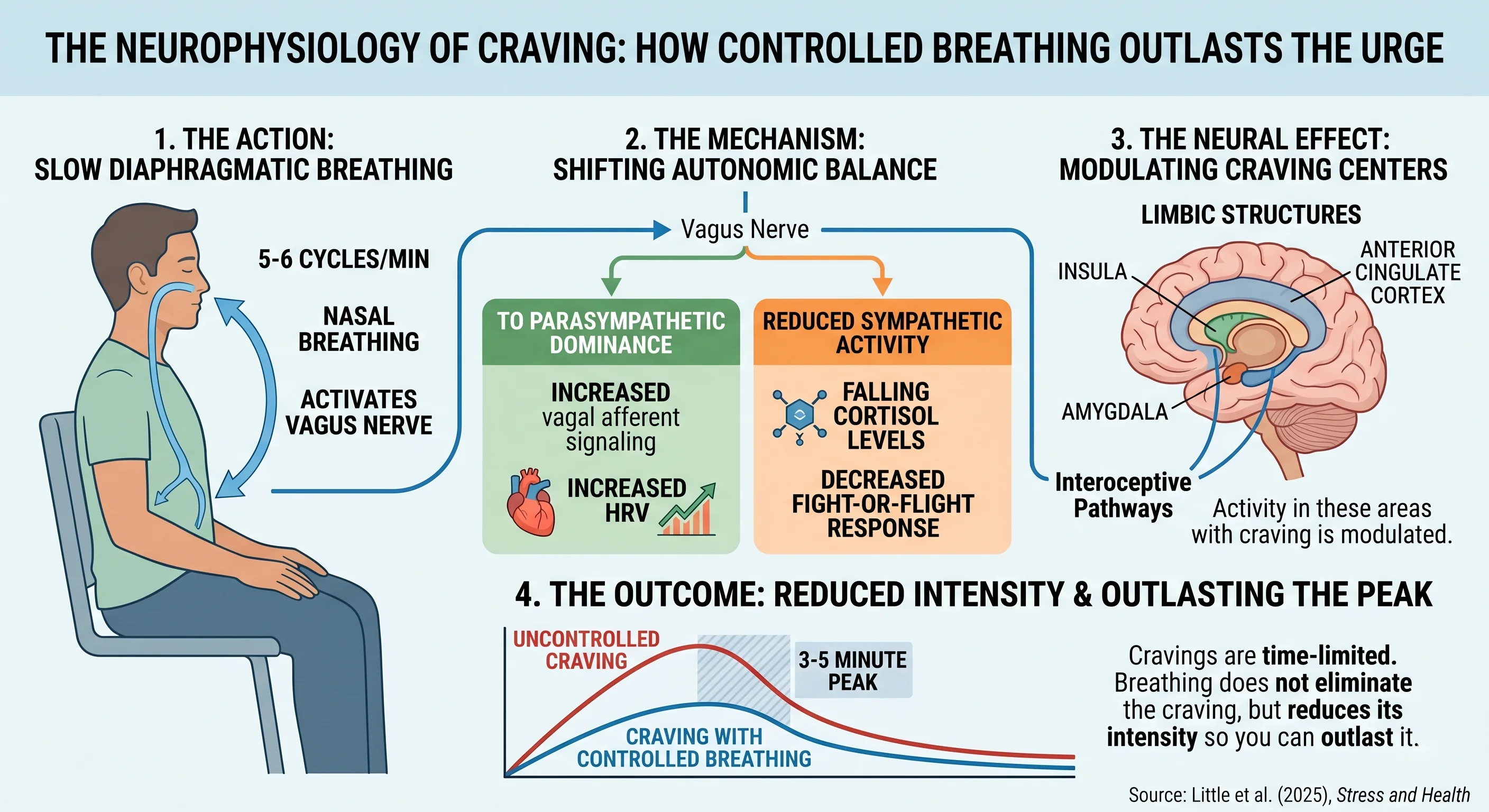
A craving, at the neural level, is a time-limited event. Research consistently shows that cravings peak at approximately three to five minutes and subside whether or not the person smokes. Controlled breathing does not need to eliminate a craving permanently — it needs to reduce its intensity sufficiently that the person can outlast it. The evidence suggests it can do exactly this.
Clinical Evidence: What the Research Shows
The clinical literature on breathing exercises and smoking cessation is now substantial enough to draw cautious but meaningful conclusions, though the field continues to mature.
The earliest controlled investigation of breathing and craving was conducted by McClernon et al. (2004), who found that five deep breaths taken every 30 minutes over four hours produced significantly lower craving ratings and negative affect in overnight-abstinent smokers compared to a no-treatment condition. This foundational study established that controlled breathing has measurable acute effects on the craving experience in a controlled design.
The most compelling direct evidence for craving specifically comes from Price et al. (2022), a randomized clinical trial (N=57) published in Addictive Behaviors. Women receiving outpatient addiction treatment were randomized to either cardiovascular resonance breathing at 6 breaths per minute or a sham condition (14 breaths per minute) during urge episodes over an 8-week intervention. Women in the sham condition showed the craving increases that are typically observed during outpatient treatment. Women in the resonance breathing condition did not show such increases. The authors described this as resonance breathing blocking the craving escalation seen in the control group. This is a mechanistically distinct finding from general relaxation: it demonstrates direct interference with the craving response at the moment of provocation.
Shahab et al. (2013) tested yogic breathing exercises — ten minutes of diaphragmatic and alternate nostril breathing — in a randomized trial of 96 abstaining smokers. At immediate laboratory follow-up, all craving measures were significantly reduced in the breathing group compared to a video control (strength of urges: F(1,96) = 16.1, p < 0.001). The authors noted that out-of-session adherence was low, which accounted for the lack of carry-over effects at 24-hour follow-up, and called for further research on field delivery. This study establishes that the breathing techniques themselves work acutely — the challenge is implementation.
A 2022 cluster-randomized clinical trial examined a three-part breathing exercise protocol over six months in smokers attempting cessation. While the improvement in abstinence rate did not reach conventional statistical significance in the primary outcome, the authors explicitly noted that the improvement was clinically relevant and concluded that the intervention may be recommended to smokers interested in cessation, alongside a call for larger replication studies.
The most compelling recent feasibility data comes from Kumar et al. (2026), published in Cureus, which evaluated a structured 30-minute volitional yoga breathing (VYB) module in high-dependence smokers (Fagerström Test for Nicotine Dependence score >7). After four weeks, frequency of smoking urges decreased by 38.5% (p < 0.001) and intensity of urges decreased by 39.4% (p = 0.004), alongside a 17.98% improvement in FEV₁ (Forced Expiratory Volume — a measure of how much air you can forcefully exhale in one second, indicating improved lung function). These are substantial effect sizes in a clinically challenging population, and they support both the craving-management and pulmonary rehabilitation value of sustained breathwork for smokers.
Evidence-Supported Breathing Techniques for Craving Management
The following techniques are presented in order of directness of evidence for smoking and craving. The first two have been tested directly in smokers or substance use populations in controlled designs. The latter two are well-supported for stress and autonomic regulation, with evidence that makes clinical application to cessation reasonable — but readers should know the distinction.
1. Resonance/Paced Breathing (Six Breaths per Minute)
Best evidence for: blocking craving escalation in urge situations
Resonance frequency breathing, also called paced breathing or coherent breathing, has the strongest direct evidence of any breathing technique for craving in substance use contexts. The technique involves slow, rhythmic breathing at precisely five to six complete cycles per minute — each cycle consisting of a roughly five-second inhalation and a five-second exhalation, with no pause between them. At this rate, the breathing rhythm entrains with the Mayer wave oscillation (the natural, rhythmic rise and fall of your blood pressure) and the baroreceptor reflex arc, maximising HRV and producing the strongest measurable parasympathetic response that controlled breathing can generate (Lehrer & Gevirtz, 2014).
The distinction between paced breathing at the resonance frequency and generic "slow breathing" is clinically meaningful. Price et al. (2022) found that women practicing resonance breathing in the face of urges did not show the craving increases that their control counterparts experienced during eight weeks of outpatient addiction treatment — not a reduction, but a block. The control condition used in this trial was 14 breaths per minute, which is essentially normal breathing pace; the resonance condition was 6 breaths per minute. The difference in outcome was a function of that specific rate.
How to practice: Sit comfortably with a straight spine. Breathe in slowly and evenly through the nose for five seconds, allowing the abdomen to rise — diaphragmatic engagement is essential for the vagal mechanism to operate. Exhale slowly and evenly through the nose for five seconds. Maintain a smooth, unbroken rhythm without pausing between inhale and exhale. A simple metronome, a breathing app, or a slow visual guide is helpful for maintaining the rate consistently, particularly during a craving when attention is divided.
This technique benefits most from daily practice outside craving episodes. Maintaining a consistent six-cycles-per-minute rhythm under the cognitive load of a craving requires procedural familiarity. Five to ten minutes of daily practice builds both the autonomic conditioning and the habit that make it effective when it is most needed.
2. Diaphragmatic (Abdominal) Breathing
Best evidence for: acute craving reduction and negative affect in smokers
Diaphragmatic breathing is the foundational technique on which resonance breathing is built, and it has the broadest direct evidence base for craving management in smokers across multiple independent study designs. It involves conscious engagement of the diaphragm as the primary respiratory muscle rather than the accessory chest and shoulder muscles that many people habitually use under stress.

Mechanically, diaphragmatic movement stimulates the vagus nerve through mechanical pressure on thoracic and abdominal vagal branches, increasing parasympathetic output on each breath cycle.
McClernon et al. (2004) used five deep diaphragmatic breaths every 30 minutes for four hours and found significantly lower craving ratings and negative affect in overnight-abstinent smokers. Shahab et al. (2013) demonstrated significant reductions across all craving measures in the laboratory with 10 minutes of diaphragmatic practice. Kumar et al. (2026), in a four-week structured protocol, found 38.5% and 39.4% reductions in craving frequency and intensity respectively, using a module that placed diaphragmatic breathing at its core. This is the technique with the most cumulative, directly tested evidence in smokers specifically.
How to practice: Find a comfortable seated or supine position and place one hand on the chest and one on the abdomen. Inhale slowly through the nose for four to five seconds, directing the breath so that the abdomen rises while the chest remains relatively still. Exhale fully through the nose or pursed lips over five to six seconds. Targeting approximately six cycles per minute achieves the resonance frequency and maximises the autonomic benefit, though any slow diaphragmatic pace activates the parasympathetic mechanism.
👉 Try it now: Interactive Diaphragmatic Breathing Tool
This is the recommended starting technique for smokers who are new to breathwork. It is immediately accessible, requires no equipment or training context, and can be deployed at the first sign of a craving in any setting.
3. Alternate Nostril Breathing (Nadi Shodhana Pranayama)
Best evidence for: craving reduction as part of structured daily practice in smokers
Alternate nostril breathing is a classical pranayama technique investigated in multiple clinical studies directly involving abstaining smokers. The practice involves alternately occluding each nostril while breathing in a structured cycle: close the right nostril and inhale through the left; close both briefly; release the right and exhale through it; inhale through the right; close both; exhale through the left. One complete cycle takes approximately 8–12 seconds.
Its mechanism is thought to involve differential hemispheric activation through nasal cycle regulation, as well as the general benefits of slow diaphragmatic breathing that the technique inherently produces. Shahab et al. (2013) combined diaphragmatic and alternate nostril breathing over 10 minutes and found significant reductions across all laboratory craving measures compared to control. Kumar et al. (2026) incorporated alternate nostril breathing as a central component of the VYB module that demonstrated 38.5% and 39.4% craving reductions over four weeks.
How to practice: Bring the right hand to the face, using the thumb to close the right nostril and the ring finger to close the left. Close the right nostril and inhale slowly through the left for four to five seconds. Close both nostrils briefly. Open the right nostril and exhale slowly for five to six seconds. Inhale through the right for four to five seconds. Close both. Open the left and exhale. That is one complete cycle. Repeat for five to ten minutes.
This technique requires slightly more practice than the previous two and is less practical in public settings. It is best suited as a scheduled daily practice — during a morning routine, before bed, or as a pre-emptive strategy in the hours when cravings are typically most frequent — rather than as an immediate reactive response to an acute urge.
4. Box Breathing (4-4-4-4)
Best evidence for: stress regulation and cognitive clarity during withdrawal
Box breathing — four seconds inhale, four seconds hold, four seconds exhale, four seconds hold — is widely used in high-performance and clinical settings, notably by military and emergency personnel for stress regulation under acute pressure. Its evidence base for smoking cessation specifically is extrapolated rather than direct: no randomised controlled trial has tested box breathing in smokers as a primary intervention. What the research does support is its established effectiveness for acute stress management and autonomic regulation (Lehrer & Gevirtz, 2014), and its pacing — approximately 3.75 cycles per minute — falls within the slow breathing range associated with parasympathetic upregulation. Readers should understand this distinction: it is a reasonable clinical application, not a demonstrated cessation finding.
Unlike techniques weighted toward parasympathetic activation, box breathing produces a more balanced autonomic effect through its symmetrical structure, making it particularly suitable for managing the concentration impairment and cognitive fog that characterize nicotine withdrawal mid-task. Its four-count symmetry is easier to maintain while partially attending to work demands, which gives it a practical advantage in occupational settings.
How to practice: Sit comfortably. Inhale slowly through the nose for four seconds. Hold gently for four seconds. Exhale slowly through the mouth for four seconds. Hold for four seconds. Repeat for three to five minutes. If four seconds per phase feels too short, five seconds per phase remains within the slow breathing range and extends the calming window.
👉 Try it now: Interactive Box Breathing Tool
Box breathing is a reasonable complement to the techniques above, particularly for the cognitive dimension of withdrawal, applied during work hours or situations where the hand-positioning of alternate nostril breathing is impractical.
5. The 4-7-8 Technique
Best evidence for: reducing acute anxiety and improving autonomic markers
The 4-7-8 technique, developed by Dr. Andrew Weil as an adaptation of pranayama traditions, involves inhaling through the nose for four seconds, holding the breath for seven seconds, and exhaling completely through the mouth for eight seconds. The extended exhalation is the primary mechanism — prolonged exhalations activate the parasympathetic nervous system more powerfully than inhalations, and the breath hold may amplify this through mild hypercapnic effects.
Multiple randomized controlled trials have demonstrated its effectiveness in reducing anxiety and improving autonomic markers. Vierra et al. (2022), in a laboratory study published in Physiological Reports, found that three sets of 4-7-8 breathing immediately decreased heart rate and systolic blood pressure while increasing high-frequency HRV — a direct marker of parasympathetic activity. A 2025 scoping review by Priasmoro et al. covering 15 studies confirmed the technique's effectiveness across five outcome themes: stress and anxiety reduction, cardiovascular marker improvement including HRV, adaptability in clinical and community settings, benefits for healthy individuals, and enhanced parasympathetic activity via vagal pathways.
What is important to be clear about: these trials were not conducted in smokers or in substance use craving contexts. The evidence establishes that 4-7-8 breathing produces exactly the autonomic shift that cessation requires — parasympathetic upregulation, reduced heart rate, increased HRV — and the mechanistic case for its usefulness during a craving is strong. But it has not been directly tested in smokers, and readers should understand that distinction between mechanistic plausibility and demonstrated cessation efficacy.
How to practice: Place the tongue tip against the roof of the mouth, just behind the upper front teeth, and keep it there throughout. Exhale completely through the mouth. Close the mouth and inhale quietly through the nose for four seconds. Hold the breath for seven seconds. Exhale completely through the mouth for eight seconds, making an audible sound. That is one cycle. Three to four cycles during a craving episode takes 60–80 seconds and produces a noticeable autonomic shift.
👉 Try it now: Interactive 4-7-8 Breathing Tool
One caution: the seven-second breath hold can cause lightheadedness, particularly in early quit attempts when respiratory patterns may already be dysregulated. If this occurs, reducing the hold to four seconds while maintaining the extended exhale preserves the core parasympathetic mechanism.
Breathing Exercises Within a Comprehensive Cessation Strategy
The evidence does not support using breathing exercises as a standalone cessation intervention in place of pharmacological or behavioural support for most smokers. What the research does clearly support is their role as a meaningful, active component of a broader cessation strategy — one that directly addresses the acute craving and withdrawal affect that most unassisted quit attempts fail on.
Breathing exercises occupy a specific functional niche in cessation support: they are non-pharmacological, free, side-effect minimal, usable in real time at the moment a craving strikes, and they improve with practice over the quit attempt. They also address the body's stress response directly, rather than requiring cognitive reappraisal at a moment when executive function is impaired by withdrawal. For the smoker who has chosen cold turkey, breathing exercises provide a behavioural tool for the 48–72 hour withdrawal peak. For the smoker using NRT or varenicline, they complement pharmacological craving management with a skill-based approach that builds self-efficacy over time.
A craving is, by neurophysiological definition, a transient state. It peaks and it passes. Breathing exercises make the interval between onset and resolution more tolerable — and a more tolerable craving is one that is more likely to be outlasted.
Practical Protocol: Getting Started
For individuals beginning a quit attempt, the following approach draws from the clinical literature:
During the first week of abstinence, when cravings are most frequent and intense, diaphragmatic breathing at approximately six cycles per minute — the resonance rate — should be practiced at the first sign of a craving and continued for three to five minutes. This aligns with the demonstrated craving duration in the literature and ensures the technique is applied through the peak. The 4-7-8 technique can be used as an adjunct for particularly acute urges, with three to four complete cycles as the target, while remaining aware of potential lightheadedness.
For daily autonomic conditioning — building the parasympathetic reserve that makes individual cravings less overwhelming — five to ten minutes of resonance or paced breathing practice each morning is supported by the HRV literature (Lehrer & Gevirtz, 2014) as sufficient to produce measurable HRV improvements within two to four weeks. This is consistent with the approach validated in the Kumar et al. (2026) VYB module, which demonstrated 38.5% and 39.4% reductions in craving frequency and intensity respectively after four weeks of regular practice.
Tools that guide breathing rhythm, track practice consistency, and integrate breathing exercises within a broader quit structure — including goal-setting and craving journaling — make this protocol more accessible and more likely to be maintained through the critical early weeks of a quit attempt.
Key Takeaways
Breathing exercises reduce nicotine craving intensity through well-characterised physiological mechanisms: parasympathetic upregulation via vagal stimulation, HRV enhancement through baroreflex activation, and modulation of limbic craving circuitry through interoceptive pathways. The strongest direct evidence for craving specifically points to resonance/paced breathing at six breaths per minute, which blocked craving escalation in a randomised controlled trial in substance use disorder (Price et al., 2022). Diaphragmatic breathing has the broadest direct evidence base in smokers across multiple controlled studies (McClernon et al., 2004; Shahab et al., 2013; Kumar et al., 2026). Alternate nostril breathing has been tested in smokers in validated protocols with significant craving reductions. Box breathing and the 4-7-8 technique have well-supported evidence for stress and autonomic regulation — and 4-7-8 has specific evidence for anxiety and HRV improvement (Vierra et al., 2022; Priasmoro et al., 2025) — but their application to smoking cessation is mechanistically sound rather than directly demonstrated. Used consistently, they represent one of the few completely accessible, non-pharmacological, evidence-based tools available to smokers attempting cessation.
How Quitbook Supports This
Quitbook includes guided breathing exercises designed specifically for the craving window — structured to match the three-to-five minute craving duration identified in clinical literature, with pacing guidance for the resonance rate.
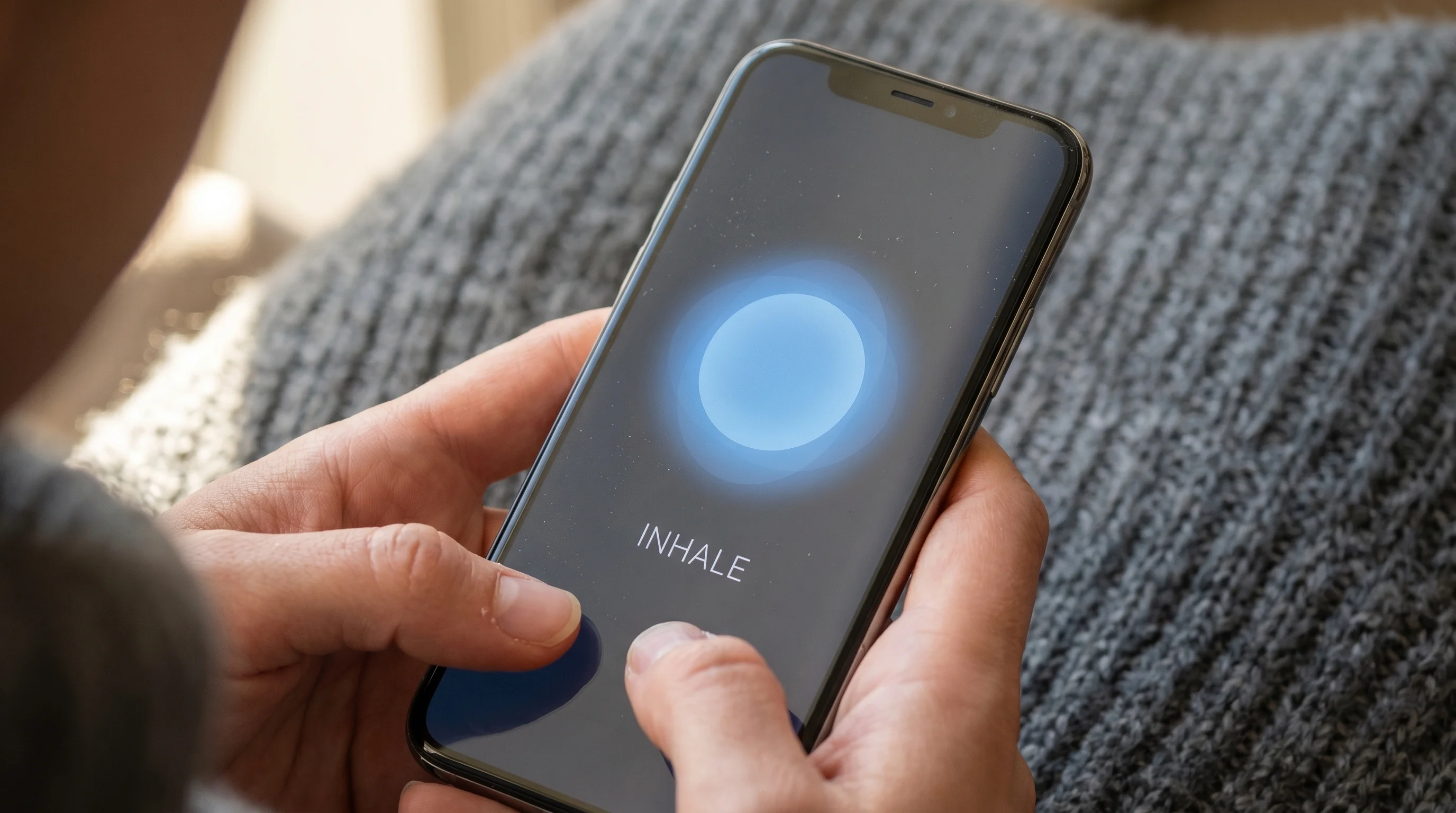
Combined with a CBT-based thought journal for examining craving triggers, dynamic personalised smoking targets for gradual reduction, and real-time quit tracking, the app addresses both the physiological and psychological dimensions of cessation in one place.
Quitbook is coming soon. Join the waitlist.
Sources
-
McClernon, F.J., Westman, E.C., & Rose, J.E. (2004). The effects of controlled deep breathing on smoking withdrawal symptoms in dependent smokers. Addictive Behaviors, 29(4), 765–772. https://pubmed.ncbi.nlm.nih.gov/15135559/
-
Shahab, L., Sarkar, B.K., & West, R. (2013). The acute effects of yogic breathing exercises on craving and withdrawal symptoms in abstaining smokers. Psychopharmacology, 225(4), 875–882. https://pubmed.ncbi.nlm.nih.gov/22993051/
-
Price, J.L., Bates, M.E., Morgano, J., Todaro, S., Uhouse, S.G., Vaschillo, E., Vaschillo, B., Pawlak, A., & Buckman, J.F. (2022). Effects of arousal modulation via resonance breathing on craving and affect in women with substance use disorder. Addictive Behaviors, 127, 107207. https://pubmed.ncbi.nlm.nih.gov/34953433/
-
Kumar, S., Saini, S., Mishra, G., et al. (2026). Volitional yoga breathing for smokers: development, validation, and feasibility of a 30-minute breathing-only intervention for smoking cessation and pulmonary rehabilitation. Cureus. https://pmc.ncbi.nlm.nih.gov/articles/PMC12914356/
-
Lehrer PM, Gevirtz R. Heart rate variability biofeedback: how and why does it work? Front Psychol. 2014 Jul https://pubmed.ncbi.nlm.nih.gov/25101031/
-
Vierra, J., Boonla, O., & Prasertsri, P. (2022). Effects of sleep deprivation and 4-7-8 breathing control on heart rate variability, blood pressure, and functional parameters in athletes. Physiological Reports. https://physoc.onlinelibrary.wiley.com/doi/10.14814/phy2.15389
-
Priasmoro, D. P., Asri, Y., & Maulina, R. (2025). Exploring 4-7-8 breathing for stress relief and improved quality of life in chronic and degenerative diseases: a scoping review. Proceeding International Conference of Inovation, Science, Technology, Education, Children, and Health (ICISTECH), 5(1), 209–217. https://doi.org/10.62951/icistech.v5i1.190
-
Little, H., et al. (2025). The A52 Breath Method: a narrative review of breathwork for mental health and stress resilience. Stress and Health. https://pmc.ncbi.nlm.nih.gov/articles/PMC12341363/
-
Thayer, J.F., & Lane, R.D. (2000). A model of neurovisceral integration in emotion regulation and dysregulation. Journal of Affective Disorders, 61(3), 201–216. https://pubmed.ncbi.nlm.nih.gov/11163422/
Medical disclaimer: This article is for informational purposes only and does not constitute medical advice. Always consult a qualified healthcare provider before beginning a smoking cessation program, particularly if you are considering complementary techniques alongside prescription medications.
Technique mentioned in this article
QuitBook Mobile App
Track your progress, manage urges, and calculate your wealth saved.
Get it on Google PlayRead Next
The Health Benefits of Quitting Smoking: A Week-by-Week Recovery Timeline
From 20 minutes to 15 years: a clinically grounded, milestone-by-milestone map of what happens to your body when you quit smoking — and why the hardest week delivers the biggest gains.
Nicotine Withdrawal: Symptoms, Timeline, and What to Expect
A clinically grounded, week-by-week map of nicotine withdrawal — what each symptom is, why it is happening neurologically, and the evidence-based action to take in the moment.