What Is CBT for Smoking Cessation — and Does It Work?
When Aaron Beck first described cognitive therapy in the 1960s, his subjects were patients with depression in outpatient psychiatric clinics. Smoking cessation was not on the agenda. Yet the framework he developed — the systematic identification and challenge of distorted automatic thoughts — turned out to be among the most reliably effective psychological tools for helping people quit tobacco. The Cochrane evidence base for that conclusion is now deep enough that individual CBT counselling is classified as an evidence-based cessation intervention by virtually every major clinical guideline globally, from the US Preventive Services Task Force to the UK's NICE. The question is not whether it works. The question worth understanding is why it works so well against a dependency with such a powerful pharmacological component — and what someone trying to quit needs to do with that understanding.
The answer lies in a distinction that purely pharmacological approaches miss entirely. Nicotine patches and varenicline address the biochemical substrate of dependence. They do nothing for the thought that arrives thirty seconds before the hand reaches for a cigarette. CBT targets that thought — the automatic cognitive appraisal that converts a stressful meeting into a felt need to smoke, that reads a moment of post-dinner restlessness as something only nicotine can resolve. Physical withdrawal from nicotine fades within weeks. The cognitive architecture that maintained the habit for years does not fade on its own. It requires deliberate, structured dismantling.

A cigarette does not solve the problem that preceded the urge. CBT's task is to make that gap visible — and bridgeable without nicotine.
— QuitBook · Behavioural Science
What Is Cognitive Behavioral Therapy?
CBT is a structured, time-limited psychotherapy built on a foundational claim: psychological distress arises not from events themselves but from the meanings we assign to them. Beck's original model proposed that negative automatic thoughts — rapid, often unconscious appraisals that precede emotional responses — were the proximal drivers of depressive mood, not downstream symptoms of it. Alter the thought pattern and the emotional consequence changes with it.
The framework was adapted for addictions beginning in the 1980s through the parallel work of Carroll, Marlatt, and Beck. The addiction-specific variant introduced two key concepts. The first is functional analysis: a systematic examination of the antecedents and consequences of substance use — the specific triggers (people, places, emotional states, times of day) that precede a craving, and the specific rewards that follow it. The second is cognitive restructuring: the active challenge of the belief systems that sustain the cycle of relapse — permission-giving thoughts, craving misattributions, catastrophic beliefs about withdrawal.
Applied to smoking, CBT does not attempt to eliminate cravings. Cravings are neurobiological events driven by conditioned dopaminergic responses. They will occur regardless of psychological intervention, particularly in the first weeks of cessation. The neuroscience of why cravings peak and pass is a separate and well-documented story. What CBT does instead is insert a deliberate cognitive process between the craving signal and the behavioural response. That gap — however narrow — is where quitting happens.
There is also something important in what CBT is not. It is not a willpower protocol. It does not ask people to simply resist cravings through force of determination. The research on thought suppression is unambiguous: deliberate attempts to not think about something reliably increase the frequency of that thought, a phenomenon Wegner called ironic process theory.8 "Don't think about cigarettes" is pharmacologically useless advice. CBT replaces suppression with structured examination — a fundamentally different cognitive operation that does not generate the suppression rebound.
Why Smoking Is a Cognitive Problem as Much as a Chemical One
Physical nicotine dependence is a finite problem. The acute withdrawal syndrome — the irritability, concentration difficulties, disturbed sleep, and intense cravings — peaks at 48 to 72 hours and largely resolves within two to four weeks. The nicotine withdrawal timeline is well-characterised across longitudinal research, and the trajectory is reassuringly predictable. But withdrawal timing does not explain the relapse pattern. Most long-term relapses do not occur in week one. They occur at week twelve, or month seven, or after two years of sustained abstinence.

The explanation is cognitive. Smoking, for most long-term smokers, becomes embedded in a web of automatic interpretations about the world and the self. Perceived stress is cognitively appraised as "I need a cigarette to handle this." A friend lighting up is appraised as "This situation calls for it." Post-dinner restlessness is appraised as "There's nothing else that fills this moment." These are not descriptions of reality. They are cognitive habits — learned over years of reinforcement, now automatic, and empirically testable. They also happen to be precisely the kind of cognitive habits CBT was designed to challenge.
Understanding your specific trigger landscape is the upstream prerequisite — the recognition of which people, places, and emotional states reliably precede the urge. CBT takes that raw material and asks a harder question: what thought is the trigger activating? Because the same trigger — say, a stressful phone call — will generate different responses in different people depending on the cognitive appraisal applied to it. Two smokers can experience identical stress and one reaches for a cigarette while the other does not. The behavioural divergence is downstream of a cognitive one.
The ABC-DE Model: CBT's Core Tool
The framework most commonly used to operationalise CBT in cessation contexts derives from Albert Ellis's Rational Emotive Behavior Therapy (REBT), specifically the ABC-DE model. Ellis's original formulation proposed that emotional and behavioural consequences (C) are not caused directly by activating events (A) but by the beliefs held about those events (B). The extension to D (Disputation) and E (Effective new belief) converts a diagnostic model into an active intervention protocol.
Applied to smoking cessation, the five steps map directly onto the experience of a craving:

The model sounds deceptively simple in summary. In practice, the hardest part is executing step B under craving conditions. When incentive salience is high and prefrontal regulation is temporarily impaired — the neurobiological state characteristic of peak craving — identifying the automatic thought requires a level of metacognitive capacity that must be trained in advance, not improvised in the moment. This is the central reason why CBT for smoking cessation is most effective when the thought-recording practice begins before the quit date, not after.
The Quitbook app includes an ABC-DE Thought Journal that guides you through this sequence in real time — logging triggers, surfacing automatic thoughts, identifying cognitive distortions, and practising reframes the moment a craving hits. See it in the app →
Cognitive Distortions That Keep Smokers Smoking
Beck's original taxonomy of cognitive distortions — developed in the context of depression — maps onto smoking behaviour with striking specificity. Several distortions appear repeatedly in the clinical literature on relapse cognitions and deserve particular attention because they are both extremely common and extremely responsive to structured challenge.
Does CBT Actually Work? The Evidence
The mechanistic logic of CBT for smoking is compelling. But mechanism is not outcome — and the outcome evidence for CBT is where the case becomes definitive.
Individual CBT
The most comprehensive synthesis of the evidence is Lancaster and Stead's Cochrane systematic review, which evaluated 27 randomised controlled trials of individual behavioural counselling for smoking cessation.1 The pooled result: individual CBT approximately doubles the odds of long-term abstinence compared to minimal-contact control conditions (brief advice or self-help materials). The risk ratio of approximately 1.57 is clinically meaningful and has remained consistent across successive iterations of the review as new trials have been added.
The benefit holds across delivery formats. Face-to-face CBT, telephone counselling using CBT principles, and structured group CBT programmes have all produced significant effects in randomised trials, though individual counselling shows a modest edge over group formats for long-term abstinence.1,2 Session dose matters too: four or more CBT sessions produce meaningfully better outcomes than one or two, suggesting that genuine cognitive change requires sufficient exposure to the framework to become semi-automatic — the same pattern seen in CBT for other conditions.
CBT Combined with Pharmacotherapy
The most significant clinical finding about CBT and smoking is not its standalone effect — it is what happens when it is combined with pharmacological support. The 2008 USPHS Clinical Practice Guideline, the most comprehensive evidence synthesis in smoking cessation, reached an unambiguous conclusion: the combination of behavioural counselling with pharmacotherapy (NRT, bupropion, or varenicline) produces quit rates substantially higher than either intervention alone.3
The pooled estimates across the guideline's meta-analytic models placed six-month abstinence rates at approximately 25 to 35% for combination therapy versus 10 to 15% for pharmacotherapy alone and 7 to 11% for behavioural counselling alone. The interaction is not simply additive. The pharmacological intervention suppresses the acute physiological withdrawal signal, giving the CBT intervention a cleaner cognitive target — the habitual and emotional dimensions of craving — without the interference of severe physical symptoms.
Digital and App-Based CBT
A particularly relevant branch of the evidence base examines whether CBT effects hold when delivered digitally rather than in person. Whittaker and colleagues' Cochrane review of mobile phone-based cessation interventions found significant effects for text-messaging and app-based programmes incorporating behavioural change theory, with moderate confidence evidence supporting their efficacy.12 A more recent evaluation by Mistry and colleagues found that a smartphone app delivering structured CBT techniques produced significantly higher abstinence rates than a control app at three and six months, with the ABC-based thought-record feature identified as the most frequently used and most highly rated component.13
The mechanism behind digital CBT's effectiveness likely involves ecological momentary intervention — the capacity to deliver cognitive support at the exact moment of high craving risk, in the specific environmental context where the craving is occurring. This is the clinical context where in-the-moment thought journalling is most powerful: not as a retrospective exercise, but as a real-time disruption of the automatic thought-to-behaviour chain.
How to Start Applying CBT Techniques Today
The evidence suggests that the optimal window to begin cognitive work is the period before the quit date, not the day of it. Entering cessation with an already-mapped trigger landscape and a pre-prepared reframe library is meaningfully different from attempting to improvise cognitive challenges under peak craving conditions. Three practical starting points:
1. Keep a Thought Record for Three Days Before Your Quit Date
The goal is not to change anything yet — only to observe. Each time an urge arises, note: the external situation (A), the thought that immediately preceded or accompanied it (B), and the emotional state and impulse that followed (C). Most people find that their personal relapse cognition pattern is remarkably consistent. The same two or three automatic thoughts — usually variations of "I need this to cope" or "I deserve a reward" — account for the majority of their urges. Identifying them before the quit date means they will not arrive as surprises.
The ABC-DE Thought Journal in the Quitbook app is built specifically for this kind of real-time logging — structured enough to surface the pattern, frictionless enough to use in the moment of a craving rather than retrospectively.
2. Pair Breathing with Cognitive Work

There is a physiological reason why breathing and CBT work better together than either does alone. The acute craving state involves elevated sympathetic tone — heightened arousal, reduced prefrontal regulatory capacity, and increased impulsivity. Structured breathing (box breathing is the most reliably effective format for this purpose) shifts the autonomic balance toward parasympathetic regulation within two to three minutes, which is precisely the window during which you need the metacognitive capacity to execute a disputation. Breathe first. Challenge the thought second. The sequence matters.
3. Build Your Reframe Library Before You Need It
Pre-prepared responses to your top three cognitive distortions — written out, specific, and personally meaningful — produce meaningfully better outcomes than generic CBT scripts. The reframe that works is the one that speaks directly to your version of the distortion. "I've managed harder things" may resonate for someone who catastrophises withdrawal. "That relaxation is withdrawal relief, not genuine calm" is more relevant for the false attribution distortion. Identify your two or three most frequent automatic thoughts, write the corresponding disputation, and review it before entering your highest-risk situations.
CBT and the Quitbook Thought Journal
One of the consistent findings in the CBT implementation literature is the gap between protocol knowledge and protocol execution. People can understand the ABC-DE model fully in a therapy session — and then freeze at step B when a craving hits, because identifying an automatic thought during peak craving intensity requires metacognitive capacity that the craving state itself temporarily impairs.
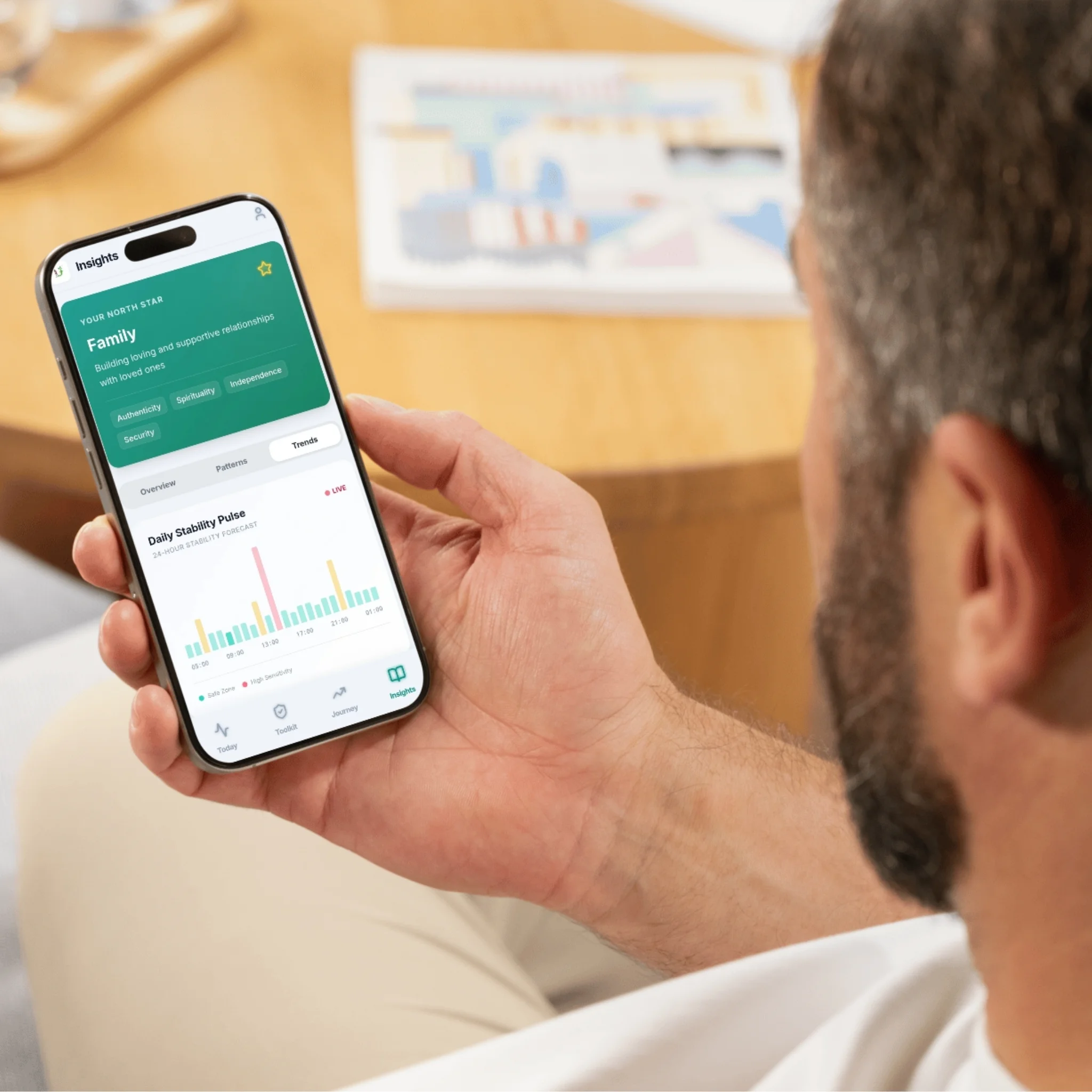
This is the clinical problem that structured digital tools are well-positioned to solve. The Quitbook ABC-DE Thought Journal guides users through the full five-step sequence in real time — prompting identification of the activating event, surfacing the automatic thought through a structured question set, flagging the most common cognitive distortions based on the user's own pattern history, and leading through the disputation and reframe process. The structure functions as external scaffolding for the cognitive process that the craving state makes harder to access internally.
The practical outcome is that each logged craving becomes both a behavioural success (a craving navigated without smoking) and a cognitive training event — incrementally building the reframe fluency that, by weeks eight to twelve, begins to function automatically. This maps precisely onto the neurological mechanism: each non-reinforced craving episode weakens the conditioned dopaminergic response, while each successful reframe strengthens the prefrontal circuitry responsible for the top-down regulation that makes the next reframe easier.
The brain recovery timeline in the Recovery section documents how these changes accumulate at the neurological level over the weeks and months following cessation — the prefrontal grey matter density improvements, the normalisation of dopaminergic baseline, the progressive restoration of the regulatory architecture that nicotine dependence had suppressed. CBT, in this framing, is not an alternative to that biological recovery. It is the cognitive practice that creates the conditions for it.
Conclusion
Nicotine is a potent pharmacological agent, and the physical dependency it creates is real. But the reason most quit attempts fail is not because the body's biochemistry is ungovernable. It is because the cognitive architecture that made smoking feel necessary — the automatic appraisals that turned every stress, every pause, every social moment into a cigarette — persists long after the physical withdrawal has passed.
CBT is effective for smoking cessation because it addresses that cognitive architecture directly. It does not suppress cravings — it dismantles the belief systems that give cravings their felt urgency. It does not require willpower — it replaces the automatic thought with a practised counter-appraisal that, over weeks of repetition, becomes semi-automatic itself. The pharmacological story of quitting smoking is weeks long. The cognitive story is months long. Both require attention, but only one of them is still running when the relapse happens at month seven.
The techniques described in this article — the ABC-DE thought record, the identification of cognitive distortions, the combination of breathing regulation with Socratic challenge — are not supplementary. They are the mechanism of sustained change. For most people, the difference between a quit attempt that fails at eight weeks and one that holds at two years is not pharmacological. It is cognitive.
Every automatic thought that gets examined loses a little of its power. Over time, what felt like a command begins to feel like a suggestion — and then like noise.
— QuitBook · Behavioural Science
Notes
-
The Lancaster & Stead (2017) Cochrane review pooled 27 RCTs (n = 22,000+). The risk ratio for long-term abstinence (≥6 months) vs. minimal contact was 1.57 (95% CI 1.40–1.77). Individual counselling showed a modest advantage over group formats in direct comparisons.
-
The 74% figure for relapse-preceding cognitions derives from retrospective recall studies (Shiffman 1985) and has been substantially replicated using ecological momentary assessment, which corrects for recall bias. EMA-based estimates range from 62% to 78% depending on the definition of "identifiable lapse thought."
-
Combination therapy rates (25–35%) vs pharmacotherapy alone (10–15%) are derived from the USPHS 2008 guideline meta-analytic models. Estimates vary by pharmacotherapy agent, number of counselling sessions, and follow-up duration.
-
The timeline of cognitive restructuring progress (Weeks 1–12) is a descriptive synthesis, not a single study outcome. It draws on Carroll (1996), Marlatt & Gordon (1985), and the session-by-session analyses from cognitive therapy trials for addiction reviewed in Beck et al. (1993).
-
Ironic process theory (Wegner, 1994) has specific implications for cessation: instructions to "not think about smoking" have been shown to increase smoking-related thought intrusion frequency. CBT's substitution model — replace the thought with a different thought — avoids this suppression rebound.
Full References +
- Lancaster T, Stead LF. Individual behavioural counselling for smoking cessation. Cochrane Database Syst Rev. 2017;3:CD001292. doi:10.1002/14651858.CD001292.pub3
- Stead LF, Lancaster T. Group behaviour therapy programmes for smoking cessation. Cochrane Database Syst Rev. 2005;2:CD001007. doi:10.1002/14651858.CD001007.pub2
- Fiore MC, Jaén CR, Baker TB, et al. Treating Tobacco Use and Dependence: 2008 Update. Clinical Practice Guideline. Rockville, MD: USPHS; 2008.
- Piasecki TM, Fiore MC, McCarthy DE, Baker TB. Have we lost track of the slope of the curve? Learning, abstinence, and time course in the assessment of tobacco withdrawal. J Abnorm Psychol. 2003;112(1):14–27.
- Shiffman S, Balabanis MH, Paty JA, et al. Dynamic effects of self-efficacy on smoking lapse and relapse. Health Psychol. 2000;19(4):315–323. (See also: Shiffman S, et al. Immediate antecedents of cigarette smoking. J Abnorm Psychol. 1985;94(4):584–594.)
- Baker TB, Piper ME, McCarthy DE, Majeskie MR, Fiore MC. Addiction motivation reformulated: an affective processing model of negative reinforcement. Psychol Rev. 2004;111(1):33–51.
- Beck AT, Wright FD, Newman CF, Liese BS. Cognitive Therapy of Substance Abuse. New York: Guilford Press; 1993.
- Wegner DM. Ironic processes of mental control. Psychol Rev. 1994;101(1):34–52.
- Marlatt GA, Gordon JR, eds. Relapse Prevention: Maintenance Strategies in the Treatment of Addictive Behaviors. New York: Guilford Press; 1985.
- Bouton ME. Context and behavioral processes in extinction. Learn Mem. 2004;11(5):485–494.
- Taylor G, McNeill A, Girling A, Farley A, Lindson-Hawley N, Aveyard P. Change in mental health after smoking cessation: systematic review and meta-analysis. BMJ. 2014;348:g1151.
- Whittaker R, McRobbie H, Bullen C, Rodgers A, Gu Y, Dobson R. Mobile phone text messaging and app-based interventions for smoking cessation. Cochrane Database Syst Rev. 2019;10:CD006611.
- Mistry N, Laverty AA, Filippidis FT. Effectiveness of a smartphone application for smoking cessation: randomised controlled trial. NPJ Digit Med. 2021;4(1):62.
- Carroll KM. A Cognitive-Behavioral Approach: Treating Cocaine Addiction. Rockville, MD: NIDA; 1998. (Core principles adapted for tobacco cessation across subsequent research.)
- Ellis A. Reason and Emotion in Psychotherapy. New York: Lyle Stuart; 1962.
- Beck JS. Cognitive Behavior Therapy: Basics and Beyond. 3rd ed. New York: Guilford Press; 2021.
- Benowitz NL. Nicotine addiction. N Engl J Med. 2010;362(24):2295–2303.
- Hughes JR. Effects of abstinence from tobacco: valid symptoms and time course. Nicotine Tob Res. 2007;9(3):315–327.
- Bricker JB, Mann SL, Marek PM, Liu J, Peterson AV. Telephone-delivered acceptance and commitment therapy for adult smoking cessation: a feasibility study. Nicotine Tob Res. 2010;12(4):454–458.
- Hölzel BK, Carmody J, Vangel M, et al. Mindfulness practice leads to increases in regional brain gray matter density. Psychiatry Res. 2011;191(1):36–43.
Medical disclaimer: This article is for informational purposes only and does not constitute medical advice. Always consult a qualified healthcare provider before beginning any smoking cessation programme, particularly if you have underlying health conditions or are considering any clinical interventions.
Technique mentioned in this article
QuitBook Mobile App
Track your progress, manage urges, and calculate your wealth saved.
Get it on Google PlayRead Next
What Is the Fagerström Test for Nicotine Dependence (FTND)? A Complete Guide
The Fagerström Test for Nicotine Dependence (FTND) is a validated 6-question clinical questionnaire that scores how physically dependent on nicotine a smoker is. Here's how it works, how to score it, and what your result means for how you should quit.
How to Quit Smoking: Cold Turkey vs. Gradual & More
Cold turkey, gradual reduction, or behavioral change? Discover science-backed quit methods — and find the one that fits you. ★ Quitbook